

- Home
- →
- Blog
- →
- Swim with Okinawa’s Gentle Giants
Swim with Okinawa’s Gentle Giants
Swim with Okinawa’s Gentle Giants
Introduction
When people think of Japan, they often envision the neon-lit crossing of Shibuya or the serene temples of Kyoto. However, far to the south lies a different world entirely—an archipelago of emerald islands draped in hibiscus and surrounded by waters so clear they are known locally as “Kerama Blue.” Here, in the subtropical paradise of Okinawa, lives one of the ocean’s most ancient and peaceful residents: the sea turtle.
Beneath the Surface: A Different Pace of Life
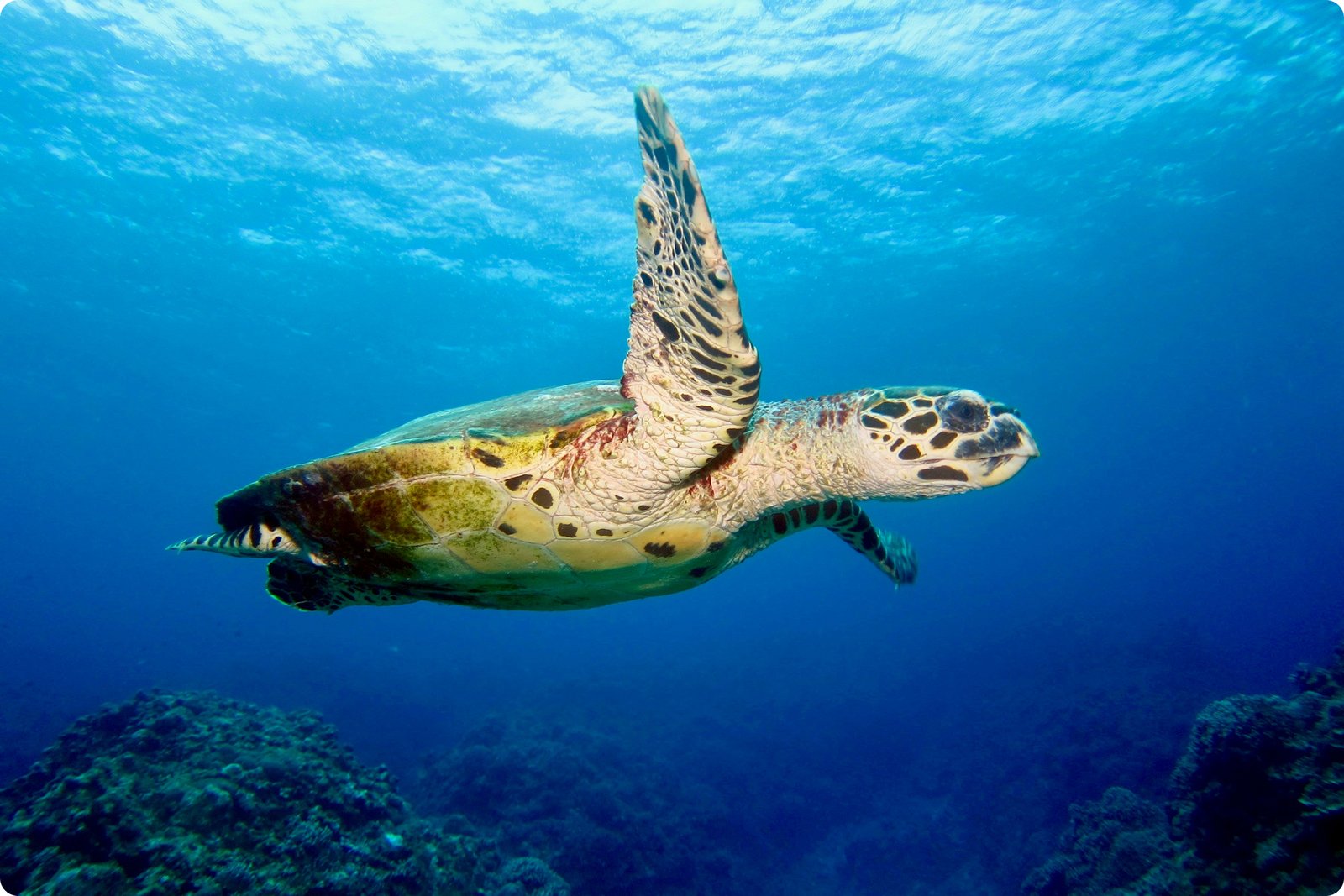
Beneath Okinawa’s crystal-clear waters, sea turtles glide effortlessly through vibrant coral gardens. Far from the crowded tourist beaches of the mainland, this is Japan’s softer, slower side—where time stretches, waves whisper against white sands, and the only heartbeat you hear is the rhythmic pulse of the ocean.
Swimming alongside these “gentle giants” is a humbling experience. Whether it is the Green Sea Turtle or the Hawksbill, these creatures move with a prehistoric grace that reminds us of the planet’s enduring beauty. In the quiet lagoons of the Kerama Islands or the hidden coves of Miyako-jima, you aren’t just a tourist; you are a silent witness to a delicate underwater ballet.
Best Spots for a Submerged Encounter
-
The Kerama Islands (Tokashiki & Zamami): Just a short ferry ride from Naha, these islands offer some of the highest visibility in the world. The shallow reefs are the perfect grazing grounds for sea turtles.
-
Miyako Island (Wainani Beach): Famous for its “Miyako Blue” water, this island allows you to swim with turtles just a few meters from the shore.
-
Ishigaki & Iriomote: For the more adventurous traveler, these islands offer wilder landscapes where turtles share the water with manta rays and colorful clownfish.
Respecting the Sanctuary
While the urge to reach out and touch these magnificent creatures is strong, the “Exceptional Experience” lies in respectful observation. Local conservation guidelines suggest:
-
Maintain Distance: Keep at least 2–3 meters away to ensure the turtles do not feel threatened.
-
No Touching: The oils on human skin can be harmful to their shells and health.
-
Reef-Safe Sunscreen: Protect the coral gardens that provide the turtles with food and shelter by using biodegradable, chemical-free sunblock.
Why it’s Exceptional
There is a profound silence that comes with being underwater in Okinawa. It is a form of meditation. Watching a sea turtle rise slowly to the surface for a breath of air before diving back into the deep is a reminder of the “soft” side of Japan. It is a destination that proves Japan isn’t just a place of high-tech efficiency, but a sanctuary of natural wonder.
Whether you are a seasoned diver or a first-time snorkeler, the waters of Okinawa offer a rare opportunity to disconnect from the digital world and reconnect with the blue.
Travel Tip: The best time to see sea turtles in Okinawa is between May and August, during their nesting season. Early morning swims often provide the calmest waters and the most intimate encounters.
Latest post
Where the Sea Shapes Everyday Life: Japan’s Coastal Soul
April 10, 2026
Sacred Encounters: The Harmonious Soul of Nara
April 10, 2026